The Perfect Wine for Cancer: Bottles That Feel Like Home
Cancer season: June 21 - July 22 · Element: Water · Ruling planet: the Moon · Modality: Cardinal
Some wines are built. Cancer's wines are raised. This is the sign of home, memory and the people you keep close, so its wine has to taste like care. Here is how astrology gets from a birth date to a style of wine. You will see why Muscadet sur lie and ancestral-method bubbles are only two examples of that style. And you will see how the Moon changes the answer from one date to the next.
How Cancer Gets From a Birth Date to a Bottle
The logic is old, and it runs in four steps.
Step one: the sign gives you coordinates. Every sign has an element, a ruling planet and a modality. Cancer is a cardinal water sign ruled by the Moon. Cardinal means it starts things. Water means feeling, memory and tides. The Moon governs mood, appetite and the pull toward home.
Step two: the coordinates give you traits. Our astrologer spent four years building a pool of traits for each sign, each trait tied back to those coordinates. Cancer carries the instinct to protect, a long memory, and loyalty to the people at the table.
Step three: each trait points to wine. A trait is matched to wines whose character does the same thing in the glass. Water asks for wines born beside rivers and seas, and for wines raised slowly instead of forced. The Moon asks for soft texture and patience. Astro-geography then hands most signs a country. Cancer is the exception. Its power place is the family cellar, and those exist in every wine country. Tuscany stands as the symbol. Grand Duke Cosimo III de' Medici drew legal boundaries around Chianti on 24 September 1716. That was one of the first protected wine areas of the modern era (Consorzio Vino Chianti Classico). Those families still hold the same hills.
Step four: a sommelier turns a style into a bottle. This is the step most zodiac wine lists skip. A style is not something you can buy. Our sommelier narrows the Cancer style to bottles actually sitting on shelves in your country. Each one gets checked for price against pleasure, recent vintages and producers we trust. If it doesn't drink well, it doesn't make the list.
So Cancer does not get one wine. Cancer gets a family of wines, and then a short list of bottles you can find near you. The two stories below are the clearest examples of that family, not the whole of it.
The Cancer Character: The Heart That Holds the Room
Two traits carry most of the Cancer story, and history keeps proving both.
The instinct to protect. Diana, Princess of Wales, born 1 July 1961, visited Britain's first hospital ward for AIDS patients at the Middlesex Hospital on 9 April 1987. She shook hands with nine patients, wearing no gloves, in front of the cameras (UPI, 9 April 1987). Fear was the rule that year. She answered with touch. That is the Cancer reflex: move closer to the person everyone else avoids.
Feeling kept as memory. Frida Kahlo, born 6 July 1907, was hurt in a bus crash on 17 September 1925 and spent three months in bed. She started painting there, and her own face became her main subject for life. "I paint myself because I am often alone and I am the subject I know best," she said. Cancer feels in high resolution and stores every detail. Kahlo stored hers on canvas.
Muscadet Sur Lie: the White Wine That Gets Raised, Not Made
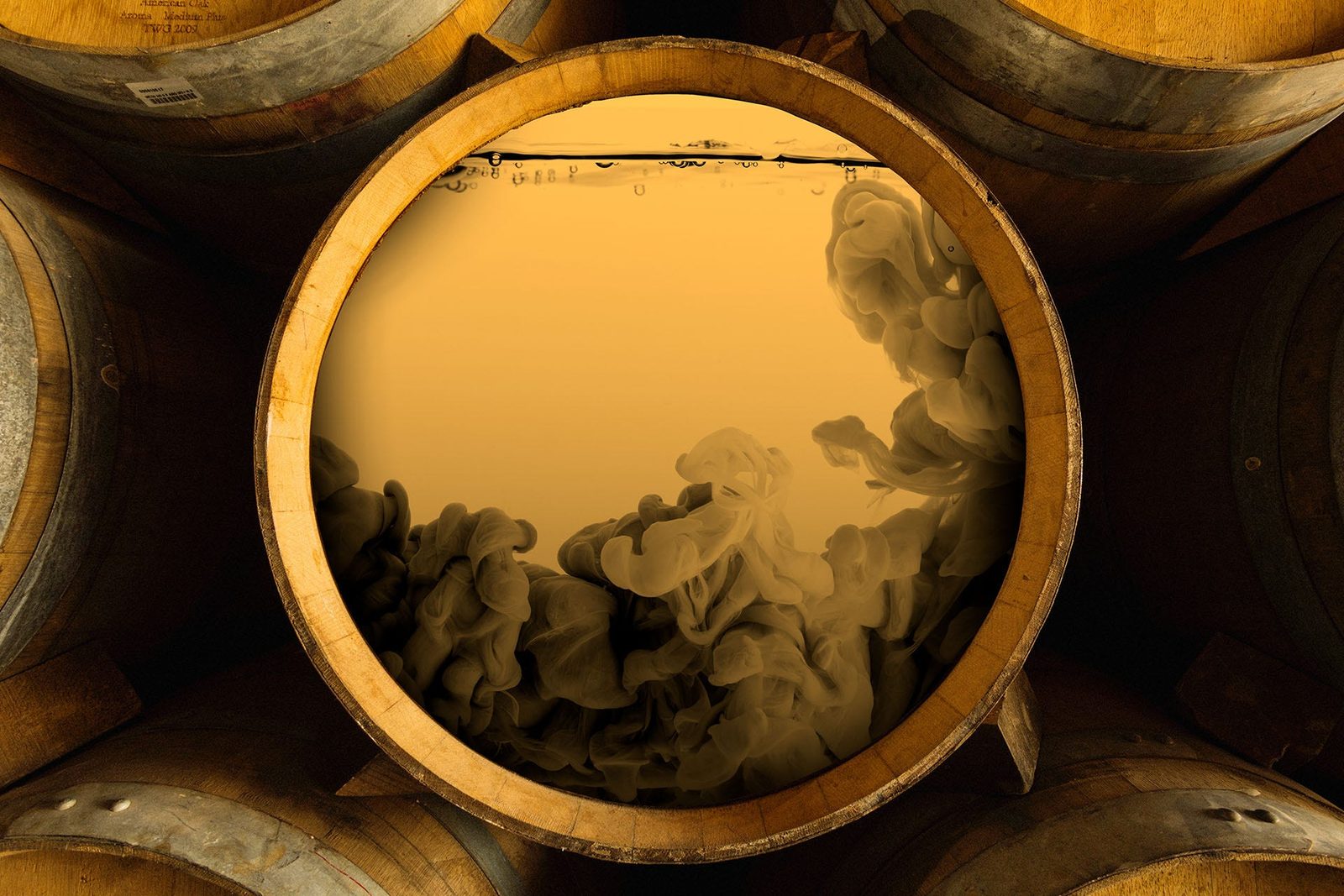
Where the Loire finally meets the Atlantic near Nantes, growers do something quietly maternal with white wine. Most winemakers pull a finished wine off its spent yeast fast. In Muscadet they leave it there. The wine rests on that yeast, called the lees, all winter. French labels print sur lie for this, which means "on the lees".
The rules are strict. To use sur lie in Muscadet Sèvre et Maine, the wine rests on its fine lees through one winter. No racking into another vessel. It goes into the bottle straight off those lees, between 1 March and 30 November after the harvest (INAO appellation specification, 2011). The grape is Melon de Bourgogne, and nothing else.
What the long winter does is easy to taste. The yeast breaks down and feeds the wine back. Hard edges soften. A gentle creaminess arrives, and fresh bread sits under the salty, stony bite of the Atlantic. A trace of gas from the lees keeps it awake.
The French have one word for this stage of a wine's life: élevage. It comes from élever, the verb for bringing up a child. A wine is not manufactured in French, it is raised. Cancer knows that difference without being told. It is also the classic partner for oysters and shared seafood platters, food that only works at a crowded table.
Ancestral-Method Sparkling: the Grandmother of Every Bubble
Champagne gets the credit for bubbles. The paper trail points somewhere else first. The earliest written mention of blanquette appears in 1531. It sits in documents kept by Benedictine monks at the abbey of Saint-Hilaire, near Limoux in southern France. Wine historians treat that as the oldest record of sparkling wine anywhere, more than a century before Champagne became famous.
The monks were not being clever. They bottled wine that had not finished fermenting. Winter cold put the yeast to sleep, spring warmth woke it inside the sealed bottle, and the gas had nowhere to go. That single-fermentation trick is now called méthode ancestrale, and Blanquette de Limoux Méthode Ancestrale is its own appellation. It uses 100% Mauzac, keeps its lees, so it stays cloudy, and sits under 7% alcohol. Blanquette de Limoux received AOC status in 1938.
Nothing gets added to make it sparkle. No dose of sugar, no second fermentation, no correction. It is the original recipe, still running after almost five centuries. Pét-nat, the cloudy bottle on every natural wine list, is the same method under a newer name.
That frequency is exactly Cancer's. The past kept alive and poured for people you love. The same instinct pulls this sign toward multi-generation estates, where the cellar hand learned the job from a grandparent. For Cancer, continuity is a flavor.
Two Bottles Out of a Whole Family
Muscadet sur lie and ancestral-method sparkling are the easiest way to explain the Cancer style. They are not the limit of it.
The same chain of reasoning lands on other bottles. Crémant, French traditional-method sparkling made outside Champagne, which also rests months on its lees. Pét-nat, the modern return of the 1531 method. White Burgundy where the winemaker stirs the lees back through for texture. Sangiovese from the old family cellars of Chianti, where the hill and the recipe both got handed down. Each carries the Moon's care in a different accent.
Which of them belongs in your glass depends on two things this page cannot know: where you shop and when you pour. Availability changes completely between the United States, Spain, the United Kingdom, Australia and Canada. A Loire grower who fills shelves in Toronto can be unbuyable in Barcelona.
That is why producer names stay out of articles like this one and live in the dated horoscope. Pick a date and your region, and the horoscope returns a curated selection you can actually buy, with the reasoning attached. The style is what you get here. The bottle is what the horoscope hands you.
The Moon Moves, and Your Glass Moves With It
Your Sun sign comes from your birth date and never changes. It is your permanent wine identity, the pool of traits and styles that stay yours for life. Everything above this line is Sun-sign logic.
The Moon works differently, and this is the part most people get backwards. The Moon sign here is not a second sign in your birth chart. It is simply the zodiac sign the Moon happens to be sitting in on a particular calendar date. The Moon moves into a new sign every two to two and a half days, so this layer belongs to the day, not to you.
The rule is simple. Whatever sign the Moon is in on a given date adds that sign's selection principles to everyone's picks for that date. Cancer included.
One consequence deserves saying out loud, because it is the whole point of the system. The Moon gives you permission to drink wines that are not normally yours.
Take a night when the Moon sits in Aries. Aries is cardinal fire ruled by Mars, so its wines are the tannic, primal ones, like Georgian amber fermented in buried clay jars. On that date those wines swing open for a Cancer too, and the horoscope explains why. The other eleven signs do the same on their own dates.
Cancer gets a bonus here. The Moon is your ruling planet, so this daily layer is not an add-on. It is your own planet checking in.
You cannot work this out from a birthday. You have to look up the actual date. Our free daily wine horoscope is built on your Sun sign and shows which sign the Moon is in. The full Moon-sign recommendation, with its own wine and its own reasoning, comes with Premium, along with forecasts more than a month ahead.
Get your free wine horoscope for any date, or start with today's Cancer reading.
Buying Wine for a Cancer: the Night Counts as Much as the Birthday
Here is where the Moon layer earns its keep as a gift.
Say you are buying for a Cancer friend. Their Sun sign sets the base style, so a Muscadet sur lie or an ancestral-method sparkler is a warm start. Then look at the date the bottle gets opened. A dinner on 3 July and a dinner on 10 July fall under different Moon signs. The second bottle should differ because of it.
This holds even if you are a Cancer yourself buying for another Cancer. The Moon does not care whose birthday it is. It only cares about the date.
So the strongest gift is two bottles with one story. One for who they are, one for the night you open it. Look up the horoscope for that date and you get both, plus something to say while you pour.
Not into astrology? Use it as the story you tell at the table. Every bottle on our lists is sommelier-reviewed first, so the wine holds up on its own even if the stars do nothing for you.
Cancer Wine FAQ
What is the best wine for a Cancer?
Wines raised slowly, with soft texture and a family history behind them. Muscadet sur lie and ancestral-method sparkling from Limoux are the clearest examples. Cancer wants comfort and continuity, not spectacle. The exact bottle depends on your region and the date, which is the job of the dated wine horoscope.
Which red wine fits a Cancer?
Reds that feel gentle and homemade rather than heavy. Sangiovese from Chianti works well, because those hills have been passed down inside families for centuries. Cabernet Franc from the Loire fits too, since it grows on the same river that gives Cancer its Muscadet. Both go with food you cook for other people.
Which white wine suits a Cancer best?
A white that spent time on its lees. Muscadet sur lie is the signature, with its bread-like softness over Atlantic saltiness. Lees-stirred white Burgundy gives you the same creamy feel in a richer register. Thin, sharp whites with no texture rarely satisfy a Cancer.
What are the Cancer dates?
Cancer runs from about 21 June to 22 July. The exact cut-off shifts by a day depending on the year. If you were born on the edge of those dates, check your birth date in the horoscope instead of assuming.
What wine should I bring to a Cancer's birthday dinner?
Bring the ancestral-method sparkling from Limoux. It is the oldest recorded sparkling wine tradition on Earth, first written down in 1531. Handing it over feels like handing over a family heirloom. For a pick tuned to the exact party date, check the Cancer wine horoscope for that day.
Does the Moon sign really change which wine suits me?
Yes, and it is what makes each date different. The Moon moves into a new sign every two to two and a half days. That sign adds its own wine principles to the day. A Cancer on a Moon-in-Aries evening can happily drink a tannic amber wine that is normally nobody's idea of a Cancer bottle. Because it depends on the calendar, you have to look up the specific date.
Which food goes with Cancer wines?
Food you share from the middle of the table. Muscadet sur lie is the standard partner for oysters, mussels and seafood platters. Ancestral-method bubbles handle soft cheese, ham and fruit tarts without fuss. Sangiovese wants tomato sauce, roast chicken and long Sunday lunches.
What does "sur lie" actually mean on a label?
Lees are the spent yeast cells left over after fermentation. Sur lie means the wine stayed on them instead of being separated out. The yeast slowly breaks down and gives the wine a creamy texture and a fresh-bread smell. In Muscadet Sèvre et Maine the wine has to rest through one winter and be bottled straight off those lees.
Do I need to believe in astrology for this to work?
No. The astrology picks the style, and a certified sommelier picks the bottle. If the stars do nothing for you, treat the sign as a way to leave your usual shelf and try something new. Plenty of our readers arrive as skeptics and stay for the wine.
Where can I buy the wines recommended for Cancer?
We don't sell wine. Our dated horoscope shows a curated selection for your region, currently the United States, Spain, the United Kingdom, Australia and Canada. The links go to retailers, who handle the sale and the age check. Please drink responsibly.
Curious how we build these pairings? Read how the wine horoscope is made.
Because for Cancer, wine isn't just something you drink. It's something you pass around.
Get Your Personalized Cancer Wine Horoscope
Enter your details below to receive wine recommendations for today or any special date.